

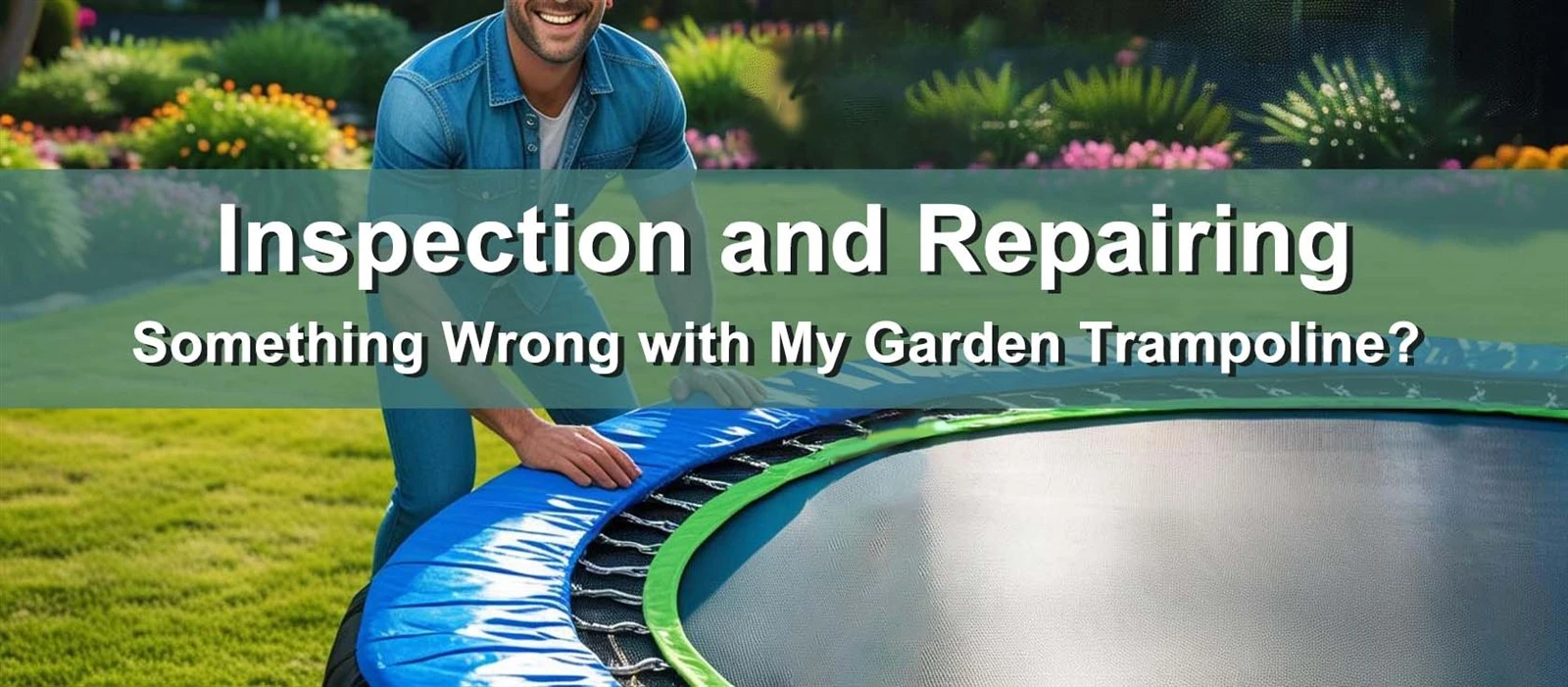
As a professional garden trampoline manufacturer, Mzone understands the frustration when a garden trampoline suddenly stops working! Don't worry, trampoline problems usually have a traceable cause. We can find out the problem and solve it step by step, but safety comes first, so please stop using the trampoline first!
We can check from the following aspects carefully:
🔍 Step 1: Check your garden trampoline carefully to find the root cause of the problem
Safety-critical components - a sign to stop using immediately!
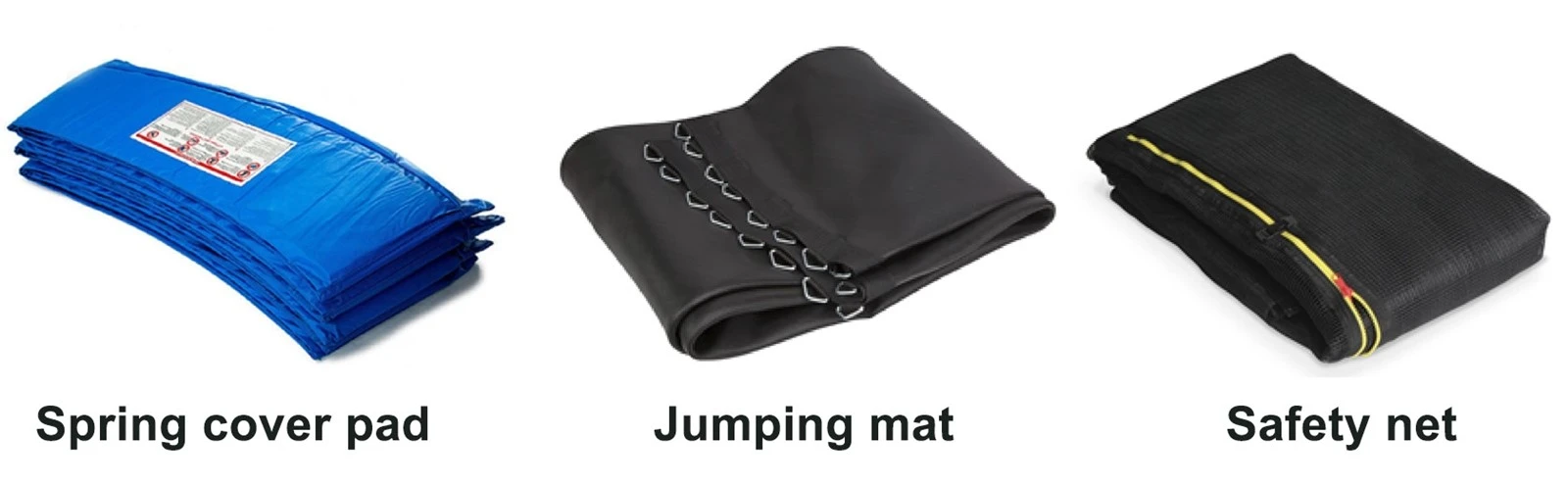
- Springs: Check for broken, deformed, severely stretched and lost elasticity, or springs that have fallen off the frame/spring. If you find a spring with a problem, please don't ever use it again!
- Jumping Mat (spring surface): Check for large tears, holes (especially near the spring hook), severely worn and thin areas, or large areas of seam cracking. Any significant damage means danger.
- Safety net/Net poles
Mesh: Are there any large holes or tears? Is the zipper damaged and cannot be closed?
Net poles: Are they bent or broken? Are the connections (top, bottom, connection points with the frame) loose, damaged or falling off?
Net straps/ropes: Are the straps/ropes connecting the net to the net poles or frame worn or broken?
- Frame: Are there any obvious bends, dents, cracks or breaks in the main frame tubing? Are the joints (usually T- or U-joints) loose, cracked or damaged? Damage to the frame structure is extremely dangerous.
- Spring Cover Pads: Are the protective pads covering the springs seriously displaced or damaged, exposing the springs? Are the Velcro, straps or buckles that secure the pads failing in large numbers?
Functional problems - causing difficulty or discomfort in using garden trampoline
- The jumping mat is loose and sagging: The overall feeling is soft and weak. This may be:
The spring is aged, stretched too much and loses its elasticity (most common).
The jumping mat itself is aged, stretched and deformed.
The jumping mat was not tightened during installation.
- Abnormal bounce feeling: It feels too hard, too soft, uneven (one side is high and the other side is low, or a certain area is particularly soft/hard). Possible reasons:
Part of the spring is damaged or failed.
The tension of the spring cloth is seriously uneven.
The frame is deformed, causing the spring cloth to be uneven.
The ground is uneven (although it should be leveled during installation).
- Abnormal sound: creaking, metal friction, breaking sound, etc.
The connection parts (spring hooks, frame joints) are loose, lack lubrication, or begin to damage.
The spring itself is rubbing or about to break.
The cushion rubs against the frame/spring.
Note: Continuous, harsh or new abnormal noises are often early signs of component damage and need to be taken seriously!
Other Problems of Garden Trampolines May Occur
- Overweight: Has the maximum load-bearing capacity of the trampoline been exceeded? Multiple people jumping at the same time or users who are too heavy will accelerate the damage of components.
- Bad weather: Has the strong wind blown down the trampoline (not firmly fixed)? Has the heavy rain caused the parts to rust and the trampoline to sink? Has the snow crushed the trampoline?
- Aging: Trampolines are exposed to the sun and rain outdoors. Even if the quality is good, the materials (especially the trampoline, safety net, cushion, spring) will age, become brittle, and lose strength over time.
- Animal damage: Are there any signs of being scratched or bitten by pets or other animals?
- Missing accessories: Is a small connected part lost?
🛠 Step 2: Take action based on the problem of your garden trampoline
If you find serious safety hazards (broken/falling springs, large holes in the trampoline, bent and broken frames, broken net poles, large holes in the net, etc.)
Stop using it immediately! Do not allow anyone to go up. If possible, isolate it with warning tape or obvious obstacles to prevent others (especially children) from misusing it.
The next step is to evaluate the repairability:
- If the damaged part is a replaceable independent component (such as a single spring, part of the cushion, a certain net pole connector), and you can find the original or fully compatible accessories, you can try to replace it. Be sure to strictly follow the instructions to ensure that the installation is firm and the tension is correct.
- If the damaged part is a core structural component (the main frame tube is broken, the trampoline is damaged in a large area and cannot be repaired, and the net structure fails as a whole), or multiple key components are damaged/aged at the same time, it is strongly recommended to scrap it. The repair cost may be close to or higher than that of a new trampoline, and it is difficult to guarantee safety performance by repairing it yourself. Safety is priceless!
Loose springs / weak bounce problems of your garden trampoline
- Check all springs: Make sure there is no damage or overstretching. If most of the springs are obviously aged and elongated, replacing all springs is usually the only effective solution (matching models need to be purchased).
- Try to re-tighten (carefully): If the spring is in good condition, it may not be tightened during installation or loose after use. According to the instructions, use special tools (usually spring hooks or retractors) to re-hook the springs evenly, one by one, and diagonally. This operation requires a certain amount of physical strength and skills, and be careful of spring rebound and injury. If you are not sure, don't force it. After tightening, the spring should be flat and tight.
- Aging of spring: If the spring itself loses its elasticity, becomes obviously thinner or deformed, even tightening the spring will not work well, and the spring needs to be replaced (matching models are also required).
Uneven bounce / noise problems of your garden trampoline
- Check the ground: Make sure the ground on which the trampoline is placed is level and solid (grass, land, flat hard ground). Uneven ground can cause the frame to twist.
- Thoroughly check the frame: Make sure all pipes are tightly connected and not deformed. Tighten all screws/bolts (according to the torque required by the instructions, do not over-tighten to cause thread stripping). Check the T/U-type connector for cracks.
- Check the springs: Focus on checking whether the springs in the area with abnormal bounce feeling are damaged or failed. Replace damaged springs.
- Lubrication: Spray a small amount of silicone-based lubricant (avoid using grease, which is easy to get dusty) on the metal friction parts such as the hooks at both ends of the spring and the frame connection. This can reduce noise and protect the metal.
- Check the spring cover pad: Make sure it covers all springs and is well fixed, and there is no displacement that causes the springs to be exposed or rub against the frame.
Safety net problems (holes, bent poles, looseness)
- Small holes: can be carefully stitched with high-strength nylon thread or special trampoline net repair pieces. Large holes or extensive damage must replace the net.
- Bent the net poles: Minor bends can sometimes be carefully straightened by trying to bend them, but if the bend is severe, cracked or affects the installation, it must be replaced. It is dangerous to force a bent pole to use.
- Looseness: Check all connection points (bottom of the net pole and frame, between the top of the net pole, and the straps between the net cloth and the net pole/frame), and re-tighten the straps, tie the ropes or tighten the fixings.
Spring cover pad displacement/damage
- Displacement: Re-tighten and secure the Velcro, straps or buckles. Make sure the spring is fully covered.
- Damage: Even small damage that exposes the spring must be repaired or replaced! Small holes can be repaired with high-strength waterproof cloth and super glue. Large-area damage or aging and brittleness require the entire cushion to be replaced.
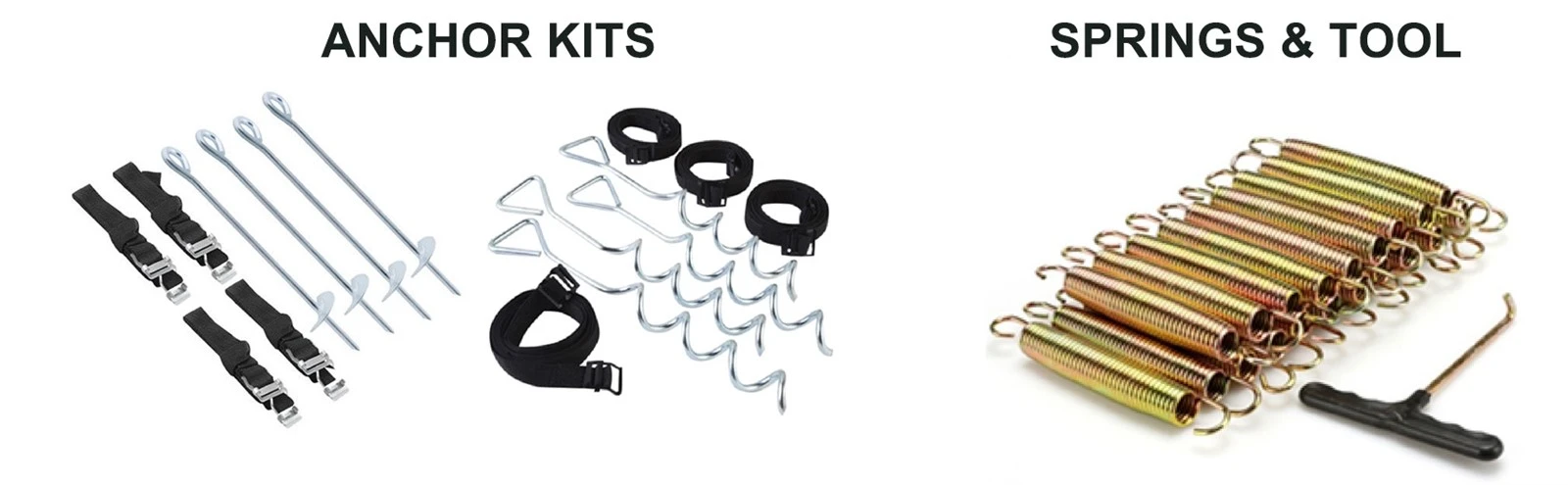
🧰 Tools/Materials You Need to Prepare (depending on the situation)
- Original installation tools for the trampoline (usually wrenches, sockets, spring hooks/pullers of various sizes).
- Adjustable wrench or socket wrench set.
- Gloves (to protect your hands from scratches by springs and metal).
- Silicone-based lubricant.
- High-intensity flashlight (for careful inspection).
- Trampoline-specific repair parts (be sure to confirm that the model matches exactly!): springs, cushions, mesh, mesh poles, connectors, etc.
- Repair materials: high-strength nylon thread, thick needle, trampoline repair sheet, strong waterproof glue, high-strength waterproof cloth (only for small repairs of non-core components).
- Level (to check the ground and frame level).
⭐ Important Tips of Using / Reparing Your Garden Trampoline
Safety First: If you have any doubts about the structural integrity of your trampoline, or if you notice any damage to any critical parts, stop using it and isolate it. Don't take chances.
Prioritize professional repair or replacement: If you are not a hands-on person, or if the damage involves the core structure and requires replacing a large area of parts (such as the entire trampoline or frame), it is strongly recommended to contact a professional trampoline repair service (if available locally) or consider replacing a new trampoline. Improper self-repair may bring greater safety hazards.
Buy original or certified trampoline accessories: When repairing, always buy accessories that are officially from the trampoline brand or clearly marked as compatible with your model. Accessories that do not match the size or strength are huge safety hazards.
Check the manual: Before repairing, be sure to find the installation and use manual for your trampoline model, which will provide key information such as component diagrams, installation steps, torque requirements, etc.
Regular maintenance: Even if it is repaired now, you should make a habit of regular inspections (recommended once a month or after every strong wind and rain), including checking all connections, spring condition, the integrity of the trampoline and net, and the coverage of the cushions. Lubricate and tighten loose parts in time.
Take good protection: Pay special attention to windproof fixing of garden trampolines (fix the legs with anchors or sandbags). It is best to remove the trampoline cloth or take reinforcement measures before bad weather (strong winds, heavy rain, heavy snow). Protective covers can be used to reduce sun and rain exposure.
If you can't fix your garden trampoline by yourself
Contact the seller you bought from: If it's still under warranty and the damage is covered by the warranty, contact the seller or manufacturer.
Find a professional repair: Search for local companies or technicians who specialize in trampoline repairs.
Consider replacing: If the trampoline has been used for many years, is seriously aged, or the cost of repair is too high, replacing it with a new, reliable garden trampoline may be a safer and more economical choice. When purchasing, pay attention to safety certifications (such as TUV/GS), maximum load bearing, material thickness of the frame and springs, and the quality of the protective cushions and safety nets.
Safety always comes first, especially in places where children play - a little hidden danger may have irreversible consequences. I hope you can find the problem as soon as possible and let the garden be filled with jumping laughter again!
🌞 Safety and quality: protecting the joy of every jump from the source
The long-term reliability, safety and user experience of a garden trampoline fundamentally depend on the product's design concept, material selection and manufacturing process.
Rather than letting end users troubleshoot and repair, it is better to give the product excellent genes at the starting point. Choosing Mzone TRAMPOLINE as your trampoline manufacturing partner means you will get:
- Products with higher safety standards: reduce end-user risks and protect brand reputation.
- Lower long-term maintenance costs: strong durability, worry-free supply of accessories, and lower overall operating costs.
- Stronger market competitiveness: win consumer trust with excellent quality and reliability.
- Smoother supply chain cooperation: professional team full support to ensure that the project is delivered on time and with quality.
All you need to do is focusing on brand building and market development, and leave professional manufacturing to us.
Explore the possibility of cooperation now and jointly create a garden trampoline that allows families around the world to jump with peace of mind!
👉 Click to contact us, or through the following methods to get exclusive solutions:
�� Business email: admin@mz-trampoline.com
�� Global direct hotline: +86 139 02 95 37 13