

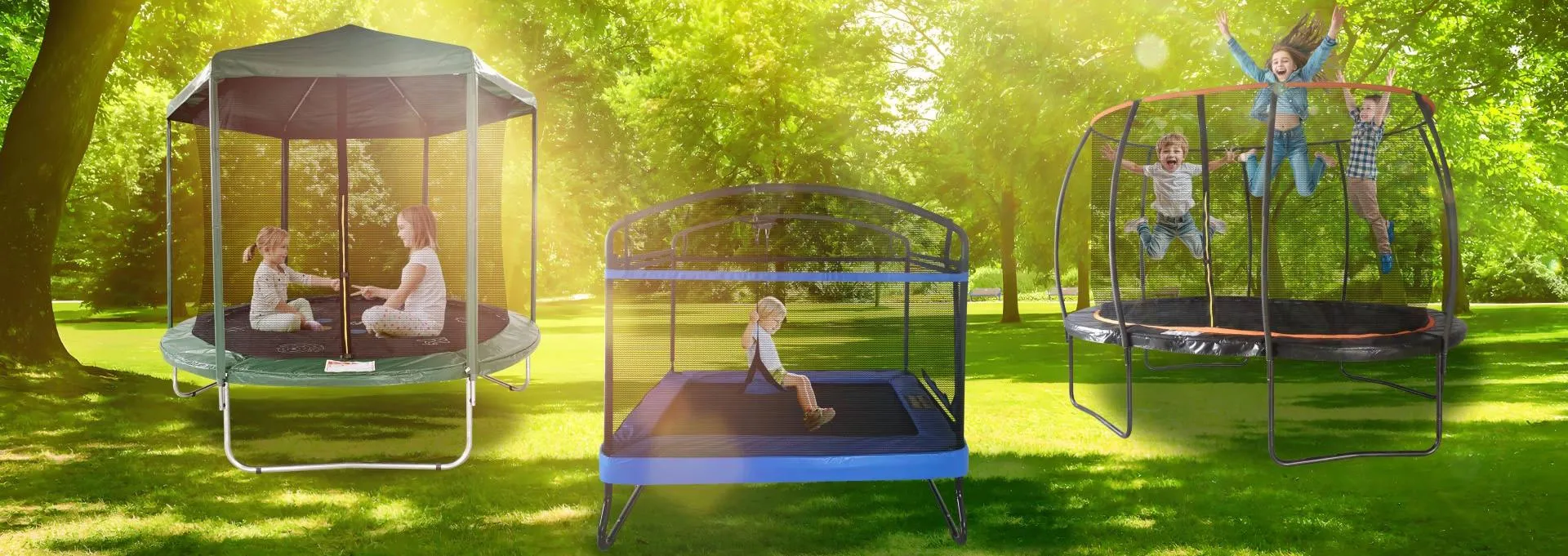
Trampoline is a competitive sport that uses the rebound of a trampoline to perform acrobatic skills. It is a type of gymnastics and is known as "aerial ballet". Trampoline originated in medieval France. It was originally created by French acrobats who fell off the "flying man" while performing. The elasticity of the safety net bounced the actors up and performed various movements. The pioneer of modern trampoline is French acrobat Tranpol, who used hemp rope to weave a protective net and used the elasticity of the net to perform.
Trampoline gradually became popular and became an official competition event in the United States in 1947. In 1964, the International Trampoline Federation was established in Switzerland and held the first World Trampoline Championships. In 2000, trampoline was listed as an official competition event in the Sydney Olympics, with two medal events for men and women on the net.
In a trampoline competition, athletes perform 10 different somersaults or somersaults on an elastic net that is 4.28 meters long, 2.14 meters wide and 1.15 meters high. The judges score based on the number of turns and rotations in the air, the height of the jump, the quality of the completed movements, and the size of the horizontal movement. A set of high-quality movements gives people a sense of elegance and grace.
The highest organization of trampoline is the International Gymnastics Federation, which was founded in 1881 and is headquartered in Switzerland. Its main activities include organizing Olympic gymnastics competitions and World Cup gymnastics competitions, as well as the World Gymnastics Championships.