

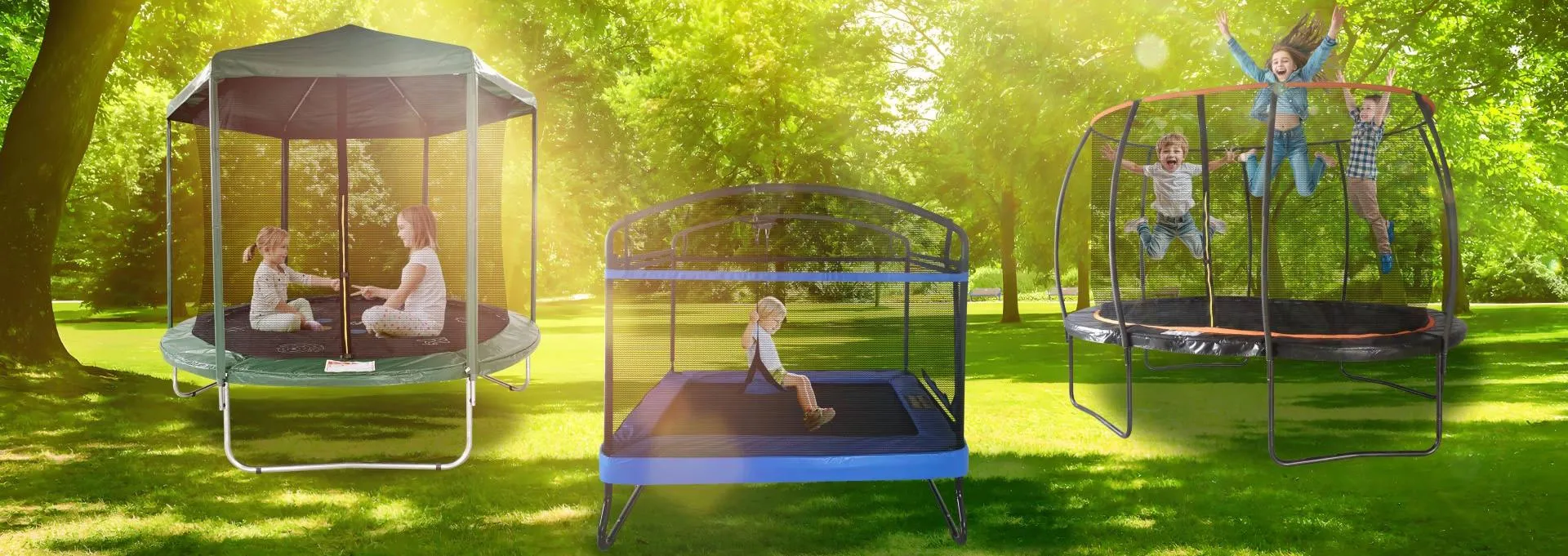
The principle of a circular trampoline is mainly based on the interaction between elastic force and gravity. There is an elastic cloth on the surface of the trampoline. When the athlete jumps on it, the cloth compresses and generates elastic potential energy. When the athlete leaves the trampoline, the cloth rebounds, converting the stored elastic potential energy into kinetic energy, allowing the athlete to fly. This elasticity enables athletes to perform complex movements and difficult skills.
In addition, the design of a circular trampoline also has its specific reasons. From the perspective of structural strength, the structural strength of a circular one is relatively weak and cannot meet the requirements of professional training and competition. Therefore, most small trampolines for home use are circular because of their simple structure, easy installation, and low strength and elasticity requirements. In places such as trampoline parks, professional trampolines, and sports training team competition venues, trampolines are mostly square because they require higher professionalism and strength requirements.